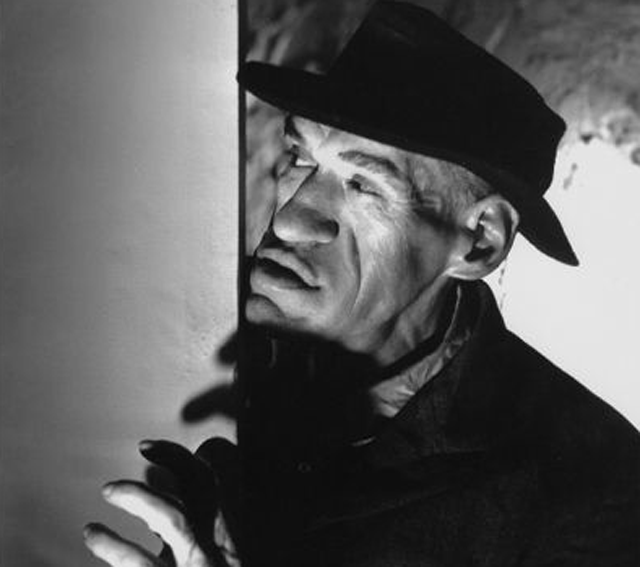
Mondays, October 29-December 3, 2012
This six-week course will attempt to revise and reframe persistent claims in scholarly discourse that 1940s horror is somehow inferior to a “classical” or “canonical” mode of horror in the 1930s, especially as represented by Universal Studios horror. Aside from their valorization of a handful of films, such as The Wolf Man (1941), The Uninvited (1944), and Val Lewton’s RKO films (1942-46), early scholarly views on the horror genre rendered the 1940s as a fragmented and lost decade. Within this framework, the creepers, chillers and thrillers of the 1940s become lost—the result of favoring monolithic binaries, or strict divisions within genre classifications, between high art and low art, auteurs and craftsman, and major studios and poverty row. Expect to see films you may not have ever heard of before in this class! Every session will be taught by a different instructor. A film
screening will accompany each session.
Week 1 – October 29: Mario DeGiglio-Bellemare
Rethinking 40s Canons: Lewton and the Grand-Guignol
Screening: “Mademoiselle Fifi” (Robert Wise, 1944)
Suggested readings for forties horror research:
Week 2 – November 5: Kristopher Woofter
Gothic Realism in 1940s Horror: John Brahm’s “Hangover Square”
Screening: “Hangover Square” (John Brahm, 1945)
Readings:
Week 3 – November 12: Anne Golden
Only The Shadow Knows: Robert Siodmak’s “The Spiral Staircase” as Key Horror Text
Screening: “The Spiral Staircase” (Robert Siodmak, 1945)
Week 4 – November 19: Karen Herland
Madness and Control in “The Snake Pit”
Screening: “The Snake Pit” (Anatole Litvak, 1948)
Week 5 – November 26: Charlie EllBé
The Sound of Terror: Horror Radio Programs and Film Adaptations in the 1940s
Screening: “Calling Dr. Death” (Reginal Le Borg, 1943)
Week 6 – December 3: Kier-La Janisse
Mail-Order Monster Kids and The Legacy of Forties Horror
Screening: “The Window” (Ted Tetzlaff, 1949)
Kier-La Janisse is a film writer, producer, former programmer, and founder of horror school The Miskatonic Institute of Horror Studies. She is the author of A Violent Professional: The Films of Luciano Rossi (2007) and House of Psychotic Women: An Autobiographical Topography of Female Neurosis in Horror and Exploitation Films (2012/2022) and contributed to Recovering 1940s Horror: Traces of a Lost Decade (2014) The Canadian Horror Film: Terror of the Soul (2015), We Are the Martians: The Legacy of Nigel Kneale (2017) and Refocus: The Films of Roberta Findlay (2023). She co-edited (with Paul Corupe) and published (via her imprint Spectacular Optical) the anthology books Kid Power! (2014), Satanic Panic: Pop-Cultural Paranoia in the 1980s (2015), Lost Girls: The Phantasmagorical Cinema of Jean Rollin (2017) and Yuletide Terror: Christmas Horror on Film and Television (2017). She edited the book Warped & Faded: Weird Wednesday and the Birth of the American Genre Film Archive (2021) and her first film as director/producer, Woodlands Dark and Days Bewitched: A History of Folk Horror was released by Severin Films in 2021.